a research about the intermediate cities and sustainable developement in the Egyptian western desert using Simulation ways .
http://www.mediafire.com/file/4jbkamw9l4ru5yz/final.rar
Thursday, October 21, 2010

Thursday, September 30, 2010
Principles of Intelligent Urbanism
Principles of Intelligent Urbanism (PIU) is a theory of urban planning composed of a set of ten axioms intended to guide the formulation of city plans and urban designs. They are intended to reconcile and integrate diverse urban planning and management concerns. These axioms include environmental sustainability, heritage conservation, appropriate technology, infrastructure efficiency, placemaking, "Social Access," transit oriented development, regional integration, human scale, and institutional integrity. The term was coined by Prof. Christopher Charles Benninger.
The PIU evolved from the city planning guidelines formulated by the International Congress of Modern Architecture (CIAM), the urban design approaches developed at Harvard's pioneering Urban Design Department under the leadership of Josep Lluis Sert, and the concerns enunciated by Team Ten. It is most prominently seen in plans prepared by Christopher Charles Benninger and his numerous colleagues in the Asian context (Benninger 2001). They form the elements of the planning curriculum at the School of Planning, Ahmedabad, which Benninger founded in 1971. They were the basis for the new capital plan for Thimphu, Bhutan.
Read More ... From wikipedia , The free encyclopedia
The PIU evolved from the city planning guidelines formulated by the International Congress of Modern Architecture (CIAM), the urban design approaches developed at Harvard's pioneering Urban Design Department under the leadership of Josep Lluis Sert, and the concerns enunciated by Team Ten. It is most prominently seen in plans prepared by Christopher Charles Benninger and his numerous colleagues in the Asian context (Benninger 2001). They form the elements of the planning curriculum at the School of Planning, Ahmedabad, which Benninger founded in 1971. They were the basis for the new capital plan for Thimphu, Bhutan.
Read More ... From wikipedia , The free encyclopedia
Zero-Carbon Cities
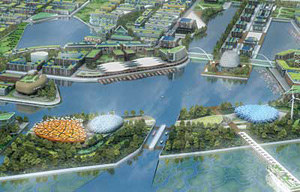
Once upon a time, when the world’s population was a fraction of the 6.5 billion it is today, environmental issues were thought of as local problems. Writers, politicians, scientists, and activists have recorded the polluted, disease-producing conditions of urban centers for centuries. Benjamin Franklin petitioned the Pennsylvania Assembly in 1739 to stop dumping waste and remove tanneries from Philadelphia’s commercial district, citing foul odors, lower property values, and disease. And yet, even the proto-environmentalist Franklin could not predict that centuries of local industrial recklessness would one day endanger the entire planet.
read more... from Architectural record
What is an Intermediate city
here are some books talking about intermediate cities
sources :
- The definition of an intermediate city
- "الترابط بين الريف والحضر" an arabic conference
- Thesis On intermediate cities developement (introduction)
- Thesis On intermediate cities (summary)
- Thesis On intermediate cities (part one)
- Thesis On intermediate cities (part two)
- Thesis On intermediate cities (part three)
sources :
- BUE-Egypt (data room)
- الترابط بين الريف والحضر (conference)
- AlSoudany,Moamen.,"Solar Energy Application In Urban Developement" , MSc, Mansoura University,Egypt
Subscribe to:
Comments (Atom)